Billy wallson
Senior DirectorThe American Kestrel is declining across much of its range, and backyard observers may be the first to notice.
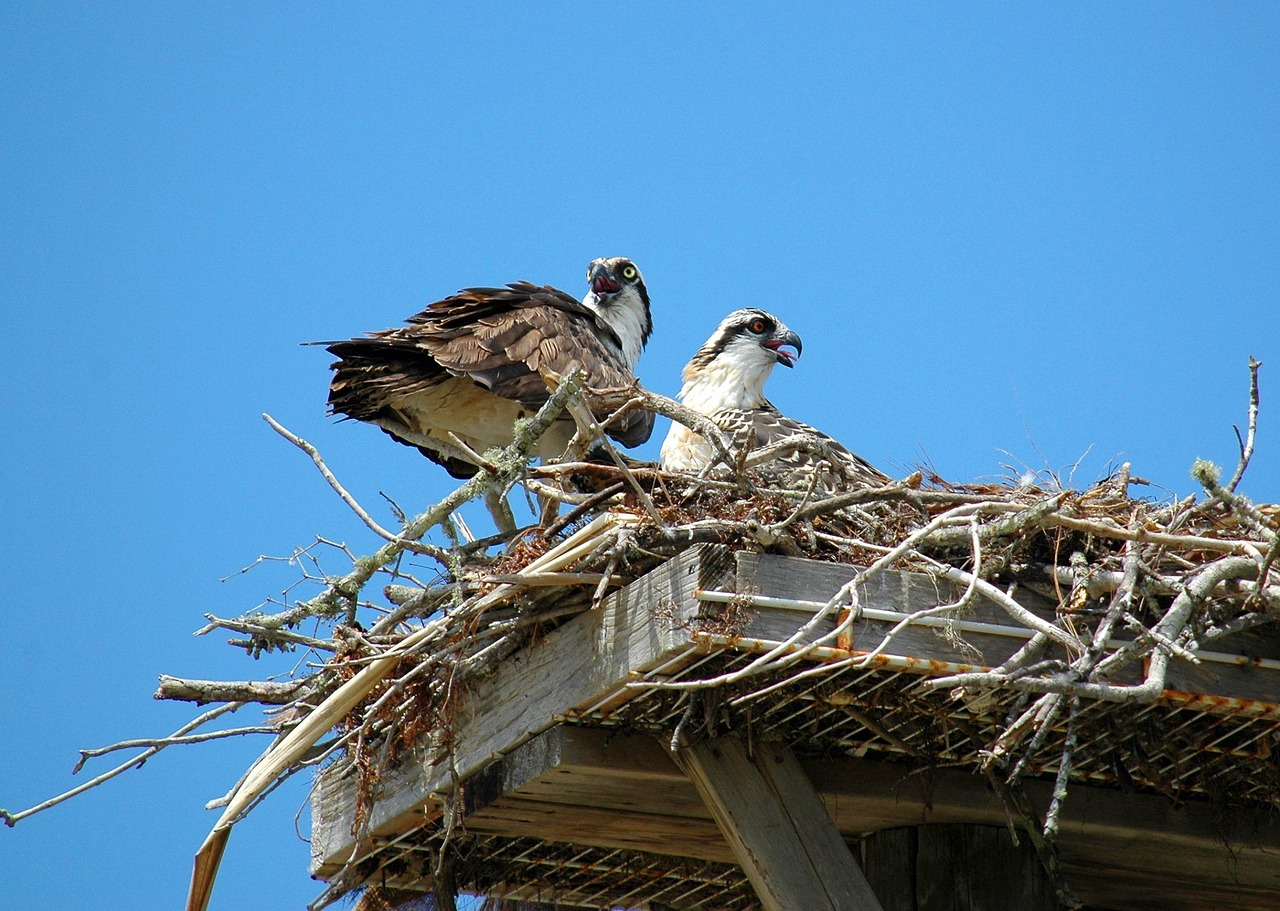
Few experiences in birding match finding an active raptor nest. Whether it is an Osprey platform on a marsh, a Red-shouldered Hawk high in a sycamore, or a Great Horned Owl on an old squirrel nest, the chance to watch a family raise young is genuinely special. It is also a moment when well-meaning observers can do real damage without realizing it.
Raptors are sensitive during the breeding season in ways that are easy to underestimate. A bird incubating eggs or brooding small chicks is balancing a tight energy budget. Every time it leaves the nest to circle and call at an intruder, it burns calories it cannot easily replace and leaves the eggs or chicks exposed to cold, heat, or predators. In the worst cases, repeated disturbance causes a pair to abandon a nest entirely.
The single most important rule is simple: if the bird is reacting to you, you are too close. Watch for the telltale behaviors. A raptor that was relaxed and now stares directly at you, mantles over the nest, or launches into alarm calls is telling you to back off. So is a bird that keeps circling overhead instead of returning to the nest. Those are not signs of interest. They are signs of stress.
Use optics instead of your feet. A spotting scope set up well away from the nest site, ideally with natural cover between you and the birds, lets you see more than you ever would up close. Keep visits short, avoid lingering in the same spot day after day, and never approach a nest during the most fragile windows: early incubation and the first days after hatching.
Be careful with information too. Sharing exact nest locations on social media or in public forums can send a stream of visitors to a site that was previously undisturbed. Many photographers and birders now use a general area when discussing sensitive nests, and it is worth adopting that habit.
Nest photography is where the ethical line gets tested hardest. A close, clean shot of a feeding chick is compelling, but if getting it required trimming branches, moving a blind closer, or playing audio to draw a bird in, the cost was too high. Responsible photographers use long lenses, natural cover, and patience. They accept that some shots are simply not worth taking.
There is also a legal dimension. In many places, disturbing active nests of protected species is prohibited, and approaching certain nests requires permits. Knowing the rules for your area is part of being an ethical observer, not an optional extra.
The reward for restraint is real. A pair that is left in peace will raise its young, and you will have the chance to watch the whole arc of the season from a respectful distance. That is a better story than a single close photo, and it is one you can come back to next year.

Cold months bring different birds and different opportunities, and winter can be the best season for raptor watching.

Learning to identify raptors at a distance comes down to silhouette, posture, and the way a bird moves through the air.
Most owls are heard long before they are seen, and learning their calls is the fastest way to know who is sharing your night woods.

Roads kill raptors and also feed them, and understanding that uneasy relationship is key to protecting the birds we love to watch.

The American Kestrel is declining across much of its range, and backyard observers may be the first to notice.

Raptor watching puts specific demands on optics, and the right pair makes the difference between a blur and a positive ID.

Copyright © 2026 Kestrel Crest. All Rights Reserved.


Roseanne Williams
Sep 1, 2026 ReplyThe thrill of watching a nest should never come at the cost of the birds inside it.