Billy wallson
Senior DirectorFollowing a raptor nest from courtship to fledging reveals a story of risk, timing, and astonishing parental investment.
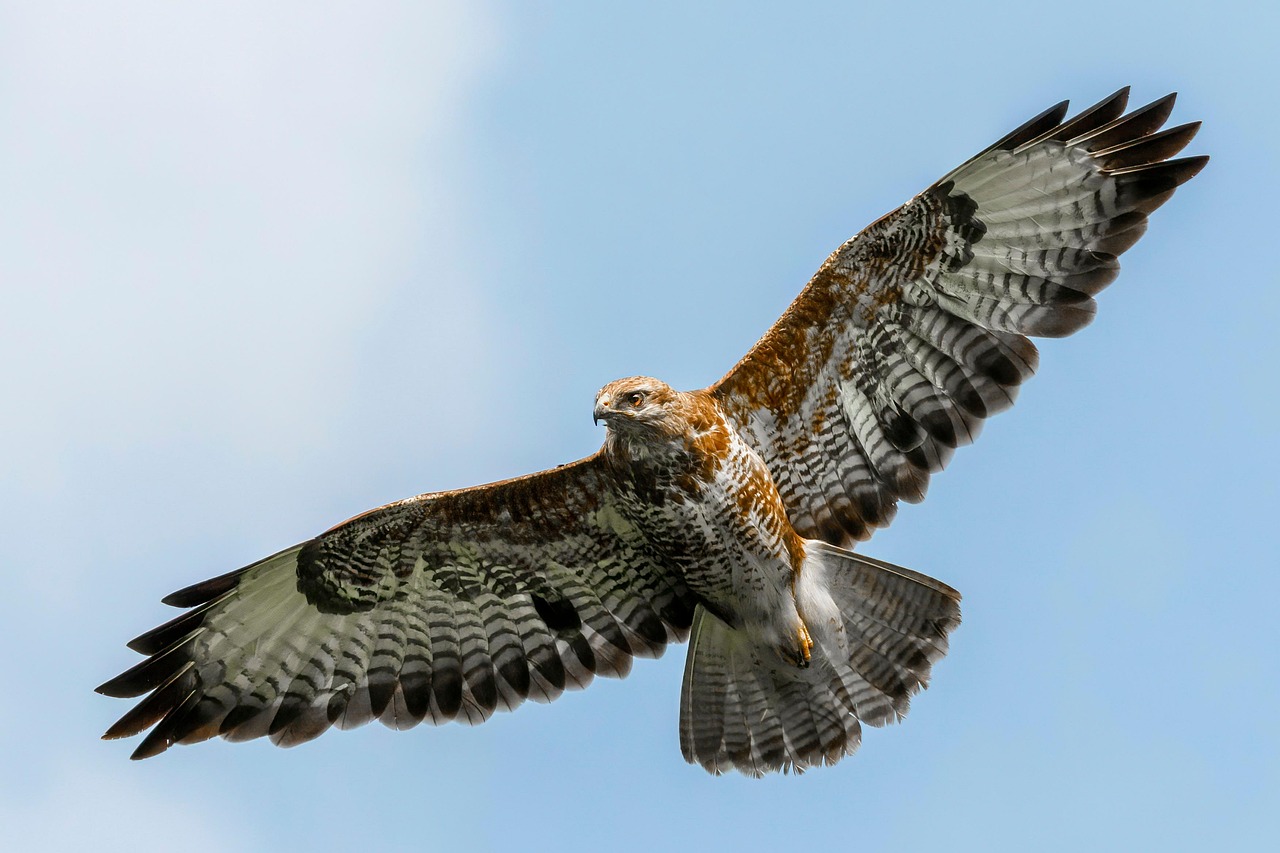
Most raptors you see in a day are not perched and close. They are distant, backlit, and moving. In those conditions, color and field marks are useless. What remains is silhouette: the length of the wings, the shape of the tail, the proportion of head to body, the rhythm of the wingbeats. Birders who master silhouette identification see more birds and understand more of what they see.
Start by sorting raptors into broad groups. Buteos, the soaring hawks, have broad wings and short, wide tails. Accipiters, the woodland hawks, have short, rounded wings and long tails built for dodging through trees. Falcons have pointed wings and fast, direct flight. Harriers glide low over open country on long wings held in a shallow V. Eagles are massive, with long, broad wings and a heavy, deliberate cadence. These categories are not perfect, but they narrow the field quickly.
Once you have the basic shape, watch how the bird uses it. A red-tailed hawk soars with a few deep, slow flaps followed by a long glide. A Cooper's hawk flaps rapidly and glides briefly, rarely holding a soar. A kestrel hovers with quick, shallow wingbeats, then drops. A peregrine's wingbeats are powerful and even, and its stoop is unmistakable: wings folded, body streamlined, speed astonishing.
Tail shape is the second clue. A buteo's tail is short and broad, often fanned when soaring. An accipiter's tail is long and narrow, used as a rudder. A falcon's tail is longer than a buteo's but narrower, and it tapers. When a bird is gliding away from you, the tail is often the clearest single feature. Note whether it is rounded, squared, notched, or banded, and whether the bird fans it or holds it closed.
Practice with common birds first. Learn the red-tailed hawk so well that you can identify it from a quarter mile. Then learn the turkey vulture, which is not a raptor but shares the sky and is often confused with one. Its dihedral, or V-shaped, wings and teetering flight are distinctive. Once those two are solid, add the red-shouldered hawk, the northern harrier, and the American kestrel. Each new species becomes a reference point.
Keep a simple log of silhouettes you have identified and the conditions in which you saw them. Over time, you will notice that certain shapes appear at certain times of day or in certain weather. A low, fast, pointed-winged bird on a windy autumn afternoon is likely a falcon. A broad-winged bird circling a thermal at midday in September is likely a buteo on migration. These associations are the beginning of real fluency, and they make every walk outside a chance to learn something new about the birds above you.

Learning to read a raptor's shape in the air is a skill that turns distant specks into identifiable, meaningful encounters.

The best raptor encounters often happen when you stop moving, find a quiet vantage, and let the birds come to you.
Learning to identify raptors at a distance comes down to silhouette, posture, and the way a bird moves through the air.

The American Kestrel is declining across much of its range, and backyard observers may be the first to notice.

Following a raptor nest from courtship to fledging reveals a story of risk, timing, and astonishing parental investment.

Learning to identify raptors at a distance comes down to silhouette, posture, and the way a bird moves through the air.

Copyright © 2026 Kestrel Crest. All Rights Reserved.


Roseanne Williams
Sep 12, 2026 ReplyLearning to read a raptor's shape in the air is a skill that turns distant specks into identifiable, meaningful encounters.